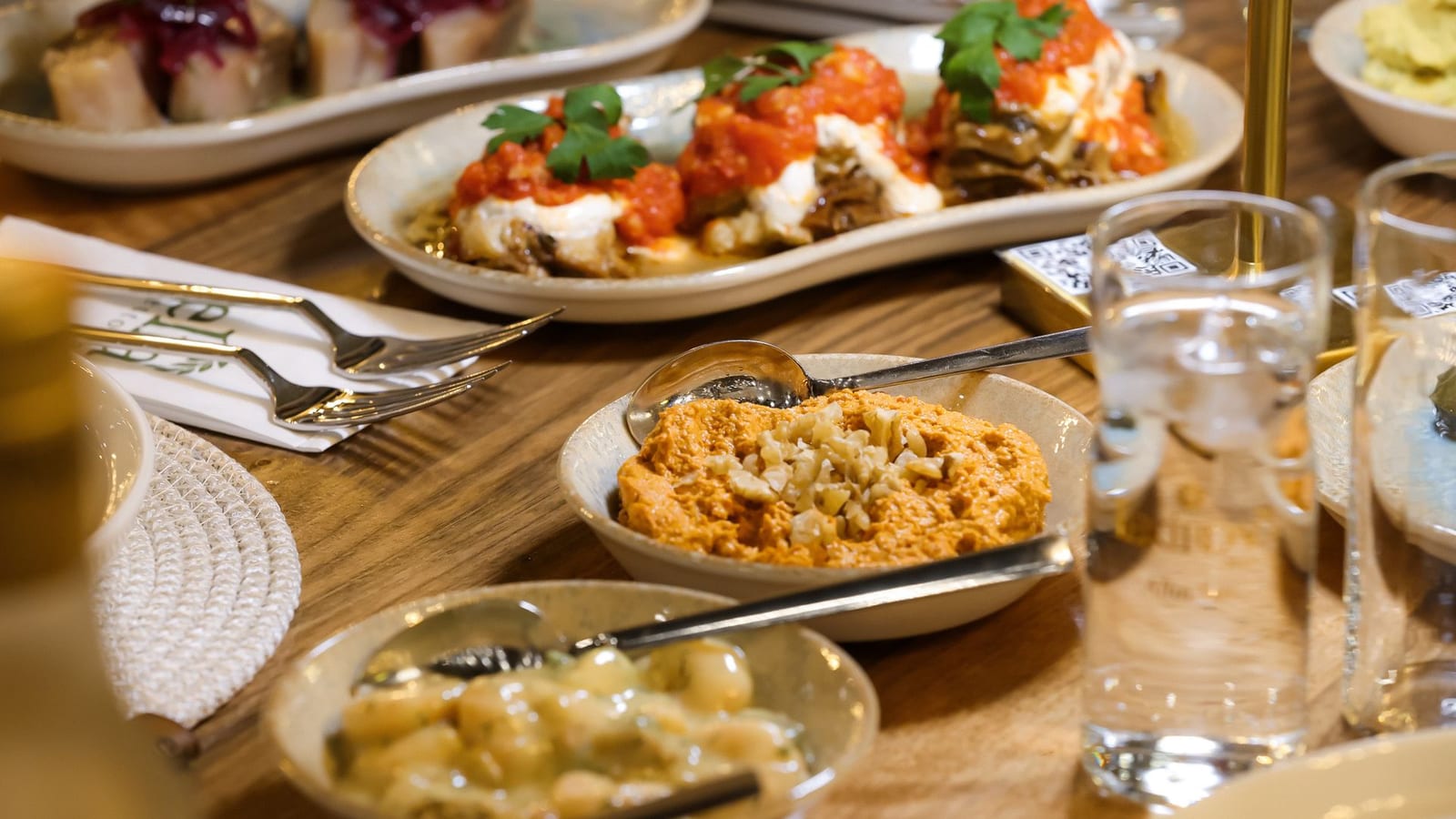
Walk into almost any taverna in Greece and you'll find, tucked between the grilled meats and the seafood, a section of the menu that rarely gets a special label because it doesn't need one. Stewed green beans in tomato and olive oil. A bowl of boiled greens dressed with lemon. Giant beans baked until creamy. These dishes aren't there to accommodate a dietary trend — they've been on Greek tables for as long as anyone can remember, shaped less by modern nutrition science than by geography, poverty, and religion. Greece's relationship with vegetarian food is old and structural, not decorative. A large share of the country's most iconic recipes are built entirely around vegetables, legumes, grains, and olive oil, with meat as an occasional guest rather than a daily requirement. That pattern didn't emerge from a health movement; it grew out of centuries of Orthodox Christian fasting practice, the rhythms of an agricultural society, and a landscape that has always produced better vegetables than pastureland. This guide looks at where that tradition comes from, the dish categories that define it, and how to eat well as a vegetarian or vegan — whether you're cooking in your own kitchen or traveling through Greece and trying to read a menu written mostly in tradition rather than dietary labels.
Nistisima: How Fasting Built a Vegan Pantry Centuries Before the Word Existed
The clearest explanation for why Greek food is so naturally plant-based lies in the Orthodox Church's fasting calendar. Observant Greeks have long abstained from animal products on a recurring basis — not occasionally, but as a rhythm woven through the entire year. Wednesdays and Fridays are traditionally meat-free, and on top of that sit several extended fasting periods: the roughly seven weeks of Great Lent leading up to Easter, the Apostles' Fast in early summer, a fast in mid-August tied to the Dormition of the Virgin Mary, and a stretch before Christmas.
Food prepared according to these rules is called nistisimo (plural: nistisima) — literally 'fasting food.' The restrictions go further than simply skipping meat: dairy, eggs, and butter are typically off the table too, while most shellfish and mollusks are traditionally permitted under church custom. What's left is a diet built on vegetables, legumes, grains, bread, fruit, nuts, and generous amounts of olive oil.
Because observant households needed genuinely satisfying meals for weeks at a stretch, generations of Greek cooks refined an enormous body of naturally vegan recipes — not as substitutes standing in for a 'real' meat dish, but as complete meals in their own right. This is the key difference between nistisima and the modern idea of a 'meatless' dinner: these recipes were never designed around an absence. They were designed to be delicious on their own terms, and they simply never included animal products to begin with. That's why so much of the Greek repertoire reads as vegan or vegetarian by default rather than by substitution.
Ladera: The Category Where Vegetables Are the Main Course
If nistisima explains why Greek food is often plant-based, ladera explains how. The word comes from ladi, the Greek word for olive oil, and it refers to a whole family of dishes in which vegetables are slow-cooked in a generous pool of olive oil, usually with tomato, onion, garlic, and herbs, until they turn soft and the oil itself becomes part of the sauce.
Ladera dishes are built around a simple principle: treat vegetables as a main course, not a side. They're typically simmered gently rather than quickly sautéed, and they're often served warm or at room temperature rather than piping hot, which is part of why they work so well as make-ahead meals and travel so easily from summer kitchens to room-temperature tables.
Well-known ladera dishes include:
- Fasolakia ladera — fresh green beans braised with potatoes, tomato, and olive oil
- Briam — a mix of zucchini, potatoes, eggplant, and peppers roasted together with tomato and olive oil
- Gigantes plaki — giant white beans baked slowly in a tomato and herb sauce
- Arakas ladera — peas and potatoes stewed with dill and lemon
- Bamies — okra cooked down in tomato and olive oil
Nearly every one of these dishes traces back to the fasting calendar described above, since they contain no meat, dairy, or eggs by design. In everyday Greek cooking, though, they're just dinner — ordered and eaten by everyone, regardless of religious observance.
The Classics: Dishes Every Vegetarian Traveler Should Know by Name
Beyond the ladera family, a handful of other dishes appear on nearly every traditional Greek menu and are worth recognizing by name, since they're rarely flagged as 'vegetarian' — they're simply part of the standard repertoire.
- Gemista — tomatoes and peppers hollowed out and stuffed with rice, herbs, and sometimes pine nuts, then baked; the meatless version is extremely common and often the default in home cooking
- Fasolada — a hearty white bean soup in tomato broth, often called Greece's unofficial national dish and traditionally a humble, everyday meal rather than a special occasion
- Revithia (or revithada) — chickpeas slow-baked or simmered with olive oil, lemon, and bay leaf; a Sunday staple on islands like Sifnos
- Fava — a smooth purée made from yellow split peas, drizzled with olive oil and often topped with capers or raw onion; the version from Santorini is particularly well known
- Spanakorizo — spinach and rice cooked together with dill, lemon, and olive oil until the rice absorbs the greens' liquid
- Horta — see the next section for more detail, but no list of Greek vegetarian staples is complete without boiled wild or cultivated greens
These dishes rarely appear on menus grouped under a 'vegetarian' heading. They're simply woven into the regular offerings, which is exactly the point — plant-based eating in Greece has never needed its own separate category.
Beans and Wild Greens: The Real Backbone of Greek Home Cooking
Legumes and greens do more heavy lifting in everyday Greek cooking than any other ingredient group, including meat. Beans, lentils, chickpeas, and split peas have historically been inexpensive, filling, and easy to store through the winter, which made them a practical foundation for rural households long before anyone thought of them as a health food. A pot of fasolada or fakes (lentil soup) with bread and olives has fed Greek families for generations as an ordinary weeknight meal, not a special dietary choice.
Horta — a broad term for boiled greens — plays a similar role. Greece is home to hundreds of edible wild greens and herbs, from amaranth and dandelion to wild fennel and nettles, many of which were traditionally foraged from fields and hillsides rather than bought. The classic preparation is almost austere in its simplicity: the greens are boiled, then dressed with good olive oil and either lemon juice or vinegar, depending on whether the variety leans sweet or bitter. It's a dish that shows up at nearly every taverna table, served as a side or a light meal of its own, and it's a good example of how minimal, vegetable-forward cooking has always been central to Greek food culture rather than a recent addition to it.
Together, legumes and greens illustrate something important about Greek cuisine as a whole: its plant-based character isn't the result of recent reformulation. It reflects what was actually affordable, seasonal, and available to most Greek households for most of the country's history. Meat was often reserved for holidays and celebrations; beans, greens, and vegetables were what people ate the rest of the time.
Eating Vegetarian or Vegan in Greece: Practical Tips
Because so much of Greek cuisine is naturally plant-based, eating vegetarian or vegan in Greece is generally easier than travelers expect — but a little know-how helps, especially outside major cities.
- Order several small plates rather than one main course. Greek dining is built around meze-style sharing, and appetizer sections tend to have the widest range of naturally vegan options, including melitzanosalata (eggplant dip), horta, gigantes, fava, and grilled vegetables.
- Ask directly about dairy and stock. Some dishes that look plant-based, such as gemista or briam, are occasionally finished with a sprinkle of cheese or cooked in a broth that isn't vegetarian, so a quick question before ordering avoids surprises.
- Seek out traditional, no-frills eateries. Family-run tavernas, magazia, and old-style kafenia that serve homemade daily dishes (known loosely as mageirefta) are often more reliably plant-based than tourist-oriented restaurants, since they're cooking from the same repertoire described above.
- Time your trip around fasting periods if you want maximum variety. During Great Lent and other fasting periods, many tavernas — particularly in more traditional or religious areas — will offer dedicated nistisimo menus that are entirely free of meat, dairy, and eggs by default.
- At home, lean on the ladera method. Slow-cooking seasonal vegetables in plenty of olive oil with tomato, garlic, and herbs is a reliable formula for turning almost any vegetable into a satisfying main course, and it scales easily for batch cooking.
- Don't assume dessert is automatically vegetarian-friendly. Many traditional Greek sweets rely on honey, so if you're strictly vegan, it's worth checking before you order.
Key Takeaways
- Greek cuisine's plant-based strength comes from centuries of Orthodox fasting tradition (nistisima), not from a modern health or vegan movement.
- Ladera — vegetables slow-cooked in olive oil — is a core category of Greek main-course cooking, not a side-dish afterthought.
- Classic dishes like gigantes plaki, fasolada, fava, revithia, spanakorizo, and meatless gemista are everyday staples, not special 'vegetarian menu' items.
- Legumes and wild greens (horta) have historically been more central to everyday Greek eating than meat, which was traditionally reserved for holidays.
- Travelers can eat well as vegetarians or vegans in Greece by ordering meze-style, asking about dairy and stock, seeking traditional tavernas, and timing visits around fasting periods.